Delivery Hours
  Mail Order Hours
Blog Details
Read our latest articles, insights, and informative stories.
Sweet Medicine of the Maple: A THC-Infused Maple Syrup Recipe
There are few things more Canadian than maple syrup. Pancakes dripping in liquid gold. Fresh maple taffy on snow. The unmistakable smell of sap boiling in early spring sugar shacks. But long before maple syrup became a national icon and a $500+ million export industry, it was Indigenous peoples who first discovered and perfected the art of tapping maple trees.
And today, as the warmer days of early spring roll across Canada and the maple sap begins to flow once again, we thought it would be the perfect time to share a little history, and a little Red Roots twist, with our very own THC-infused maple syrup recipe.
The Indigenous Origins of Maple Syrup
Maple syrup may be quintessentially Canadian today, but its roots run far deeper than modern sugar shacks and breakfast plates. The practice of harvesting maple sap originated with Indigenous peoples thousands of years ago.
Before European settlers arrived in North America, Indigenous nations such as the Anishinaabe, Abenaki, Haudenosaunee, and Mi’kmaq had already mastered the techniques for tapping maple trees and transforming their sap into syrup and sugar.
In Anishinaabemowin, maple sap has several beautiful names:
Ninaatigwaaboo – maple tree water
Wiishkabaaboo – sweet water
Ziisbaakwadaaboo – sugar water
These Indigenous communities lived across what is now known as the Maple Belt, the hardwood forests stretching from the American Midwest through Ontario and Quebec and across the Maritimes. These forests are rich with red, black, and sugar maples, trees that produce the sweet sap that flows each spring.
When the days begin warming above freezing and nights remain cold, the sap starts moving through the trees. This seasonal moment was so important that it even had its own name in the Anishinaabe calendar.
Some communities call March–April: Ziisbaakwadoke-giizis — “Sugar Making Moon.”
Others call it: Namebine-giizis — “Sucker Moon.”
While the names vary across regions, the meaning is the same: it’s maple season.
Ancient Maple Harvesting Techniques
Each spring, communities would travel to maple groves to harvest the sap.
The tapping process was simple but ingenious.
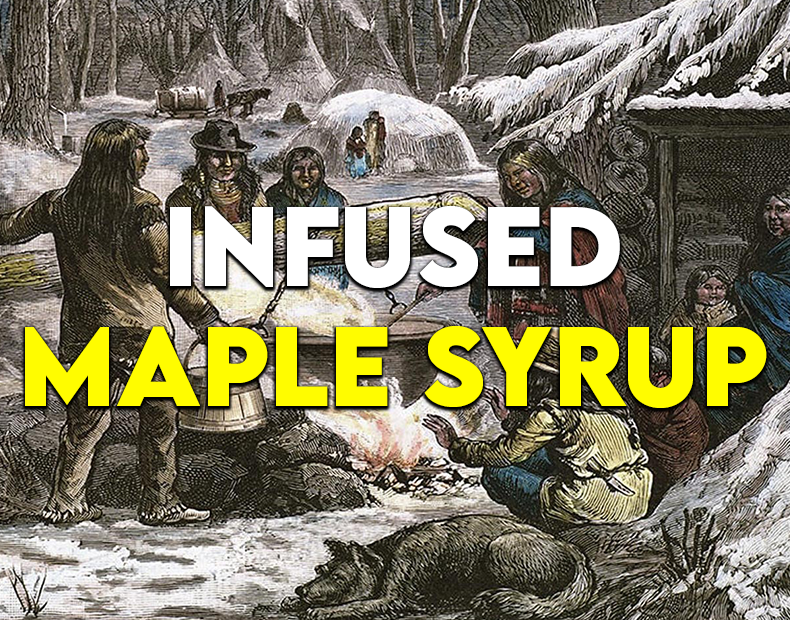
A small cut or hole was made in the tree, and a spile (often made from hollowed willow or basswood) directed the sap into containers below. Many of these containers were handmade birch bark buckets.
From there, the sap could be processed in several ways:
• Freezing Method: The sap was left outside in cold weather so the water would freeze. The ice was skimmed off, leaving a more concentrated sugary liquid.
• Boiling Method: Sap was boiled down over fires in clay or metal vessels until it thickened into syrup.
It takes an astonishing 40 gallons of sap to produce just one gallon of maple syrup, which explains why maple syrup has always been so treasured.
For Indigenous peoples, maple sugar and syrup were incredibly valuable. They were used:
• As a natural sweetener
• As medicine and anesthetic
• To preserve meats
• As an important trade item
When Europeans arrived in the 1600s, Indigenous communities shared their knowledge. By the late 1700s and early 1800s, maple syrup production had spread widely among settlers.
Today, Canada produces roughly 75% of the world’s maple syrup, making it the global leader in maple products.
Yet despite modern evaporators and steel pipelines, the fundamental process of tapping trees and boiling sap remains largely unchanged from the methods first developed by Indigenous peoples.
At Red Roots Trading Company, we love honoring those traditions while adding a modern twist.
So in the spirit of the medicine wheel, maple season, and good company around the breakfast table, here’s our favourite way to elevate maple syrup even further.
Red Roots THC-Infused Maple Syrup Recipe
A drizzle of infused maple syrup can turn pancakes, waffles, oatmeal, tea, desserts (or even a simple spoonful) into something extra special.
The best part?
It’s surprisingly easy to make.
Ingredients
1 cup pure maple syrup (Grade A or B)
2–3 grams decarboxylated ground cannabis flower
1 tablespoon coconut oil or sunflower lecithin (helps with cannabinoid absorption)
Cheesecloth (preferred) or fine mesh strainer
Double boiler or saucepan
Step 1: Decarboxylate the Cannabis
Before infusion, cannabinoids MUST be activated through decarboxylation. Otherwise, you won't feel a thing when you eat your finished syrup!
a) Preheat oven to 240°F (115°C)
b) Break/grind cannabis into small pieces
c) Spread evenly on a parchment-lined baking tray
d) Bake for 30–40 minutes
e) Allow it to cool completely
This step converts THC-A into active THC, which allows the infusion to work properly.
Step 2: Infuse the Maple Syrup
a) Heat maple syrup in a double boiler over low-medium heat
b) Stir in your decarboxylated cannabis
c) Add coconut oil or lecithin
d) Simmer on low heat for 45–60 minutes, stirring occasionally
⚠️ Do NOT allow the mixture to boil. Boiling can degrade cannabinoids and reduce potency.
Low and slow is the key!
Step 3: Strain and Store
a) Allow the mixture to cool slightly
b) Strain through cheesecloth into a sterile glass jar
c) Store in the refrigerator for up to 2 months
Dosing Tips
Homemade infusions can vary in potency depending on the flower used.
A general guideline: 1 teaspoon infused syrup ≈ 10–15 mg THC
Tips for safe dosing:
• Start with a small amount
• Wait 1–2 hours before consuming more
⚠️ Always clearly label homemade cannabis infusions, especially if sharing with others!
A Sweet Way to Celebrate Maple Season
Maple syrup has always been more than just a food. It’s a seasonal ritual. A cultural tradition. A connection to the land and to generations of knowledge passed down through Indigenous communities. Every spring when the sap begins to run, it marks the return of warmer days, renewal, and the first harvest of the year.
So whether you're pouring it over pancakes, stirring it into tea, or enjoying a carefully dosed drizzle of infused syrup, take a moment to appreciate the incredible history behind that sweet golden bottle.
From all of us at Red Roots Trading Company, happy maple season. Stay sweet. 🍁
Recent Blogs
Explore more articles and stay updated with our latest news and insights.