Delivery Hours
  Mail Order Hours
Blog Details
Read our latest articles, insights, and informative stories.
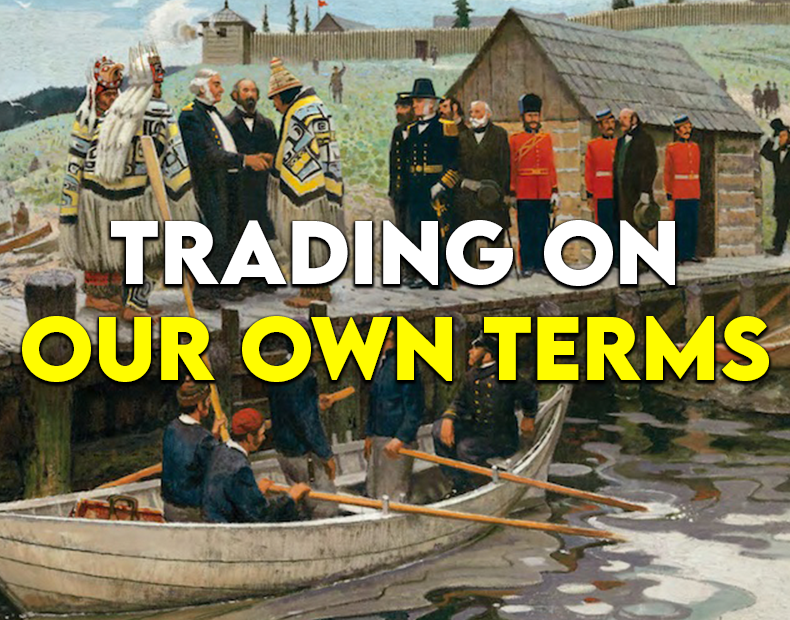
Trading on Our Terms: The Connection Between Red Roots Trading Co. & Zibi Smoke Co.
At Red Roots Trading Co., our story is one of heritage, responsibility, and community, rooted deeply in the Algonquin Nation and carried forward through modern trade. While our name has become synonymous with craft cannabis, our work extends beyond a single product. It’s about continuing the long tradition of Indigenous trade and self-determination, guided by the very laws and principles that first acknowledged our rights to these lands and economies.
One of our closest allies in this mission is Zibi Smoke Co., a sister company in spirit and ownership, but proudly independent in business.
Two Paths, One Purpose
Both Red Roots Trading Co. and Zibi Smoke Co. are owned and operated by members of Kitigan Zibi Anishinābeg, one of the Algonquin Nation’s proud communities. Though we share deep cultural and familial ties, we are distinct businesses with our own focuses and operations:
Red Roots Trading Co. specializes in cannabis, offering high-quality, carefully selected flower and products through our delivery services.
Zibi Smoke Co., on the other hand, focuses on tobacco and nicotine products, operating a dedicated tobacco and nicotine storefront for retail sales. They do not sell or handle cannabis products in any form.
While we collaborate in friendship and support, with Red Roots proudly stocking Zibi Smoke Co.’s tobacco and nicotine products for delivery, our partnership is one of respectful independence. It’s a reflection of how Indigenous businesses can coexist, uplift one another, and thrive, each walking its own path, while remaining guided by shared values.
Trading as Our Ancestors Did, On Our Own Terms
For the Indigenous owners behind both companies, trade isn’t just business, it’s a continuation of our inherent rights as First Peoples of these lands.
Our operations are rooted in inherited Indigenous land and trade rights, principles recognized long before Canada existed, and reaffirmed by some of the most significant legal and historical documents in North America.
The Royal Proclamation of 1763, issued by King George III after the Seven Years’ War, set the foundation for how these lands were to be governed. It established the first formal recognition of Indigenous land rights and the Crown’s responsibility to engage in nation-to-nation relations with First Peoples.
Importantly, the Proclamation did not prohibit trade. Instead, it sought to regulate and protect it, declaring that trade with Indigenous peoples must remain free, open, and lawful, conducted under the Crown’s oversight. It was intended to safeguard Indigenous economies, ensuring that First Nations could continue to trade and sustain themselves.
Rights Recognized in the Constitution
Centuries later, these principles are carried forward in the Canadian Constitution.
Section 35 of the Constitution Act, 1982 recognizes and affirms existing Aboriginal and treaty rights, including our rights to land, self-determination, and trade.
Section 25 of the Charter of Rights and Freedoms ensures that nothing in the Charter can diminish or override those rights.
Together, these sections act as a constitutional shield, preserving the inherent rights recognized since 1763 and protecting the continued exercise of Indigenous trade, governance, and community development.
When Red Roots Trading Co. and Zibi Smoke Co. choose to operate on unceded Algonquin territory, here in the Ottawa region and surrounding, we are exercising these rights in a responsible, lawful, and culturally grounded way. We’re continuing a lineage of trade that existed long before colonial borders, a lineage that endures despite centuries of challenge and change.
A History of Broken Promises, and the Power of Continuance
Of course, the path from the Royal Proclamation of 1763 to today hasn’t been a straight one.
Despite the Proclamation’s intent to protect Indigenous lands and rights, it was soon violated, by British colonists, land speculators, and even the Crown itself.
Colonists ignored boundaries, illegally settling west of the Appalachian Mountains.
Land speculators, like the Ohio Company, pressured for expansion and profit, bypassing Indigenous consent.
Even the British Crown eventually undermined its own Proclamation by signing land cession treaties (like the Treaty of Fort Stanwix in 1768), which opened vast territories to settlement and exploitation.
These violations were driven by greed, political pressure, and the relentless hunger for land, and they set the stage for the centuries of dispossession that followed.
Yet, despite this, Indigenous trade has never ceased. It has evolved, adapted, and persisted, a testament to our people’s resilience and the strength of our inherent rights.
The Modern Indigenous Economy
Today, businesses like Red Roots Trading Co. and Zibi Smoke Co. are part of a growing movement: Indigenous entrepreneurs reclaiming economic sovereignty and revitalizing trade on our own terms.
By operating within our inherent rights, not outside of them, we are creating sustainable, community-rooted economies that honour the past while shaping the future.
We trade not out of defiance, but out of heritage and responsibility, guided by our ancestors, protected by our rights, and built for generations to come.
In Closing
The relationship between Red Roots Trading Co. and Zibi Smoke Co. is more than business. It’s a living expression of Indigenous collaboration, self-determination, and lawful trade, grounded in history, affirmed by law, and inspired by community.
Together, we are showing what it means to trade with integrity, as our ancestors did, and to continue building prosperity on our terms, on our land, and in our way.
Recent Blogs
Explore more articles and stay updated with our latest news and insights.