Delivery Hours
  Mail Order Hours
Blog Details
Read our latest articles, insights, and informative stories.
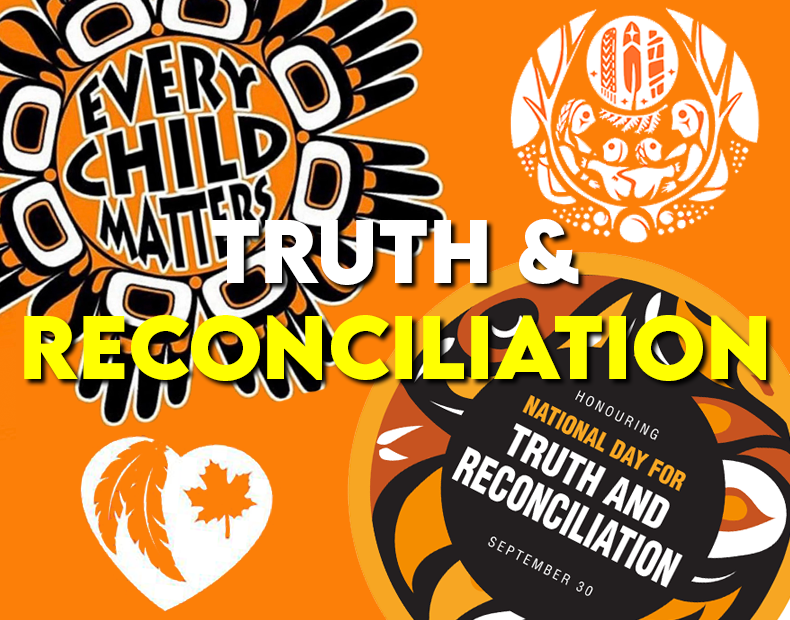
Truth & Reconciliation: Honouring Survivors, Facing the Past, & Building a Better Future
On September 30th, communities across Canada pause for Truth and Reconciliation Day. A day of remembrance, reflection, and responsibility. For Indigenous peoples, the history behind this day is deeply personal, rooted in generations of pain and resilience. For non-Indigenous Canadians, it is a call to learn, to acknowledge, and to take action toward a future built on respect, knowledge, and healing.
Orange Shirt Day, also observed annually on September 30th, is a day of remembrance and reflection inspired by the story of Phyllis Webstad, a residential school Survivor whose new orange shirt, gifted by her grandmother, was taken away on her first day at a residential school, symbolizing the stripping away of culture, language, and identity. Wearing orange has since become a powerful act of solidarity, awareness, and education, reminding Canadians of the lasting impacts of residential schools and the need for truth, reconciliation, and healing.
Why Truth and Reconciliation?
For over 150 years, Indigenous children were taken from their homes and forced into residential schools, institutions designed not to educate, but to erase. These schools, often run by churches and funded by the federal government, sought to strip away language, culture, and identity under the guise of “assimilation.” Children were forbidden from speaking their languages. Countless children faced emotional, physical, and sexual abuse. Thousands of these children never returned home, their unmarked graves still being uncovered to this day.
The lasting impacts of these schools are undeniable: intergenerational trauma, loss of language, disconnection from culture, cycles of grief and pain, and systemic inequities that persist across Canada.
The Truth and Reconciliation Commission of Canada (TRC) was created in 2007 as part of the Indian Residential Schools Settlement Agreement. Its purpose was to document survivors’ stories, establish an honest record of what happened, and guide the country toward reconciliation. Over six years, the TRC heard testimony from more than 6,500 survivors, family members, and community representatives, and in 2015, released its final report.
Its conclusion was clear and devastating: residential schools amounted to cultural genocide.
The Work of the TRC
The TRC’s mandate was more than storytelling. It sought to:
Establish a historical record of the residential school system and its legacy.
Acknowledge survivors and their families, offering space for their truths to be heard.
Educate Canadians, ensuring the realities of residential schools could no longer be denied.
Promote reconciliation, providing pathways for Indigenous and non-Indigenous peoples to move forward together.
Preserve survivors’ stories, through the creation of the National Centre for Truth and Reconciliation (NCTR) in Winnipeg, a permanent archive and educational hub.
The TRC’s work culminated in 94 Calls to Action. A roadmap urging governments, institutions, businesses, and individuals to address the harm of residential schools and build a more just Canada.
The 94 Calls to Action
The Calls to Action span nearly every aspect of Canadian society:
Child welfare: Keeping Indigenous children with their families and in culturally rooted care.
Education: Closing funding gaps, making Indigenous history mandatory in schools, and supporting language revitalization.
Health: Recognizing Indigenous healing practices and addressing health disparities.
Justice: Ending the overrepresentation of Indigenous peoples in prisons and addressing systemic racism in the legal system.
Commemoration: Honouring survivors and lost children through monuments, ceremonies, and the creation of Truth and Reconciliation Day itself (Call to Action #80).
Business and media: Ensuring reconciliation shapes economic development, journalism, and corporate responsibility.
Reconciliation in daily life: From public servants to newcomers to Canada, everyone has a role to play in building respect and understanding.
While progress has been made, many Calls to Action remain unfulfilled. The path forward is ongoing, and requires all Canadians to listen, learn, and act.
Truth Before Reconciliation
Here at Red Roots Trading Company, we believe in speaking truthfully: there can be no reconciliation without truth. That means confronting the horrors of the past, no matter how uncomfortable. It means acknowledging that these systems were not “mistakes of history,” but deliberate policies of assimilation and cultural destruction.
It also means honouring the courage of survivors who came forward, often at great personal cost, to share their truths so future generations might heal. Their voices light the way.
Why This Matters Today
Truth and Reconciliation Day is not simply a holiday. It is a reminder that knowledge is prevention. By remembering what was done in residential schools, we ensure that such atrocities can never be repeated.
For Indigenous peoples, it is a day of honouring ancestors, grieving losses, and continuing the work of healing and revitalization. For non-Indigenous Canadians, it is a day of humility, of listening, of asking: What can I do to help carry this forward?
Our Commitment at Red Roots Trading Co.
As an Indigenous-owned trading post, Red Roots stands on the side of truth, respect, and responsibility. We believe that education is medicine. By sharing the history of residential schools and the Calls to Action, we do our part to keep memory alive and to foster reconciliation in our community.
We also affirm that reconciliation is not symbolic, it must be lived. It is in how governments uphold treaties, how schools teach children, how businesses work with Indigenous communities, and how everyday people choose to listen and learn.
Moving Forward Together
September 30th is one day on the calendar, but reconciliation is a lifelong journey. As Canadians, we each have a role to play in answering the Calls to Action. Read them. Share them. Reflect on them. And, most importantly, act on them.
Because reconciliation isn’t about the past, it’s about the future we build, together.
At Red Roots, we believe that the only way forward is through truth, respect, and reconciliation. May we carry that commitment, not just today, but every day of our lives.
Recent Blogs
Explore more articles and stay updated with our latest news and insights.